10kw Solar System Buying Tips for Your Home Energy Needs?
Investing in a 10kw solar system for your home can be a game changer. With rising energy costs, many homeowners are seeking sustainable alternatives. A well-planned solar system can significantly reduce monthly bills and provide energy independence.
Selecting the right 10kw solar system requires careful consideration. Factors such as your energy consumption, roof space, and local climate play a critical role. Researching reputable brands and installers is essential. Not all systems deliver the same efficiency or durability, and you want a long-term solution.
It's also vital to think about your home's future needs. What happens if your family grows? Will your energy requirements change? Finding a system that can adapt to your lifestyle is crucial. Making this investment should bring peace of mind, aligning with both your current and future energy goals.
Understanding Your Home's Energy Requirements for a 10kW Solar System
Understanding your home’s energy requirements is crucial when considering a 10kW solar system. The average American household uses about 877 kWh per month, which translates to approximately 29 kWh per day. A 10kW solar system can generate roughly 40 kWh per day, depending on location and sunlight exposure. This surplus energy could offset costs or help power electric vehicles, which is becoming increasingly popular.
When evaluating your energy needs, look at seasonal variations. For example, summer months often lead to higher energy consumption due to air conditioning. An analysis by the U.S. Energy Information Administration (EIA) shows that cooling alone accounts for about 12% of residential energy use. If your use spikes significantly during peak summer months, adjusting your solar system’s capacity may be wise.
Consider your home’s unique characteristics. Factors such as roof orientation, shade coverage, and panel efficiency are essential for maximizing solar energy production. Notably, solar panels degrade over time, typically losing about 0.8% efficiency per year. Understanding these factors can lead to better long-term financial planning. A professional energy audit can provide insights into potential energy efficiency improvements, further impacting the feasibility of a solar investment.
Key Factors to Consider When Choosing a 10kW Solar System
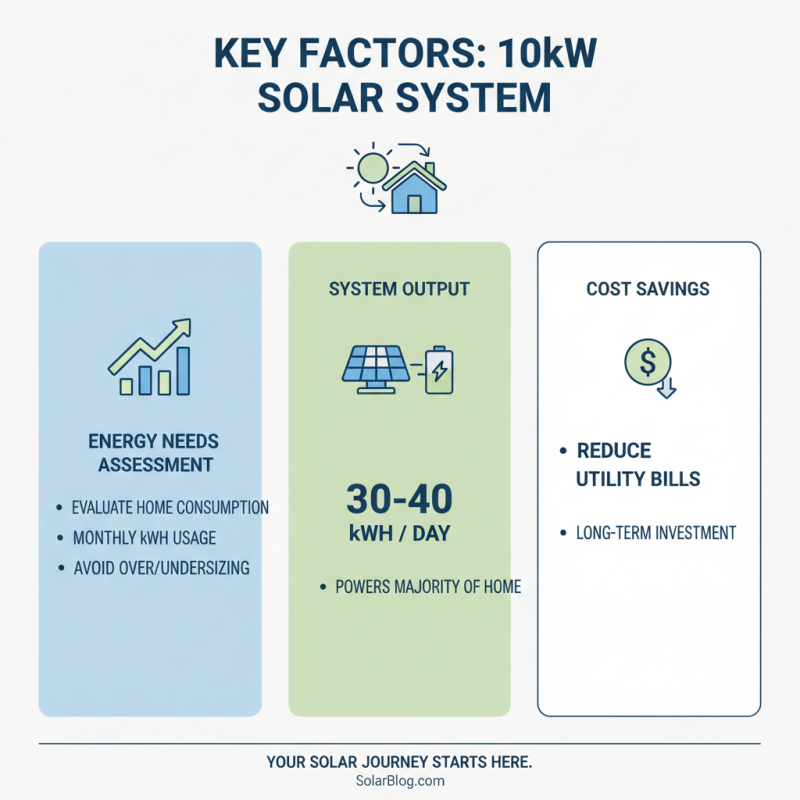
When considering a 10kW solar system, it's crucial to assess your home’s energy needs. A 10kW system can typically produce between 30 to 40 kilowatt-hours (kWh) per day. This output can offset a significant portion of monthly utility bills. However, proper assessment ensures you won't overestimate or underestimate your needs.
Evaluate your energy consumption patterns. Look at your last year’s electricity bills to identify peaks and averages. The U.S. Energy Information Administration (EIA) notes that a typical household consumes about 877 kWh monthly. A 10kW system is ideal for larger homes that utilize more appliances and HVAC systems.
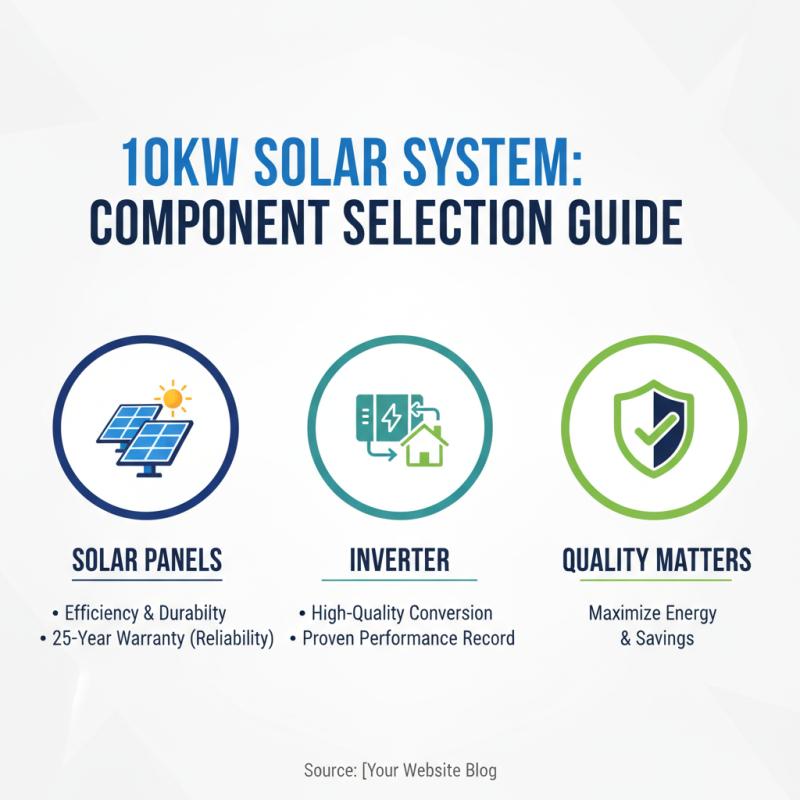
Tip: Consider efficiency ratings when selecting solar panels. Higher efficiency panels can produce more power with less space. Performance can vary, so review warranties and degradation rates. It’s not just about upfront costs; long-term performance matters too. Additionally, local climate heavily influences system performance. High temperatures or frequent cloud cover may reduce energy production.
Reflect on potential incentives available in your location. These can greatly affect overall investments. Tax credits and local programs can lower initial costs significantly. Researching these options can provide substantial savings. Choosing a reliable installer is equally vital. A skilled professional can help tailor the system to your needs, ensuring optimal performance.
Evaluating the Cost-Effectiveness of a 10kW Solar Installation
When evaluating the cost-effectiveness of a 10kW solar installation, several key factors come into play. According to the National Renewable Energy Laboratory (NREL), a typical 10kW system can offset around 70% of a household's electricity usage. In areas with higher electricity rates, homeowners could save thousands over the system's lifetime. However, upfront costs can be significant, often ranging from $15,000 to $25,000 before incentives.
Financial incentives, such as tax credits, can improve overall affordability. For example, the Federal Investment Tax Credit allows for a deduction of 26% on installation costs in 2023. This can reduce financial burdens, making solar installations more appealing. But, it's essential to evaluate local energy costs and potential savings. Energy prices can fluctuate, affecting long-term savings projections.
Moreover, installation quality matters. Reports indicate that poorly installed systems can lead to maintenance issues. An investment in quality components and reputable installers can mitigate these risks. Evaluating warranties on both the panels and installation services is crucial. It can provide peace of mind and ensure a return on investment over time. Investing in a 10kW solar system demands careful consideration of initial costs, potential savings, and long-term reliability.
Cost-Effectiveness of a 10kW Solar Installation
Finding Reputable Installers for Your 10kW Solar System
When considering a 10kW solar system for your home, finding reputable installers is crucial. The right installer can determine the efficiency and longevity of your solar investment. Start by researching local companies with a solid track record. Look for industry certifications and reviews from past clients. Positive testimonials often indicate reliability and expertise.
Tip: Ask for references. Speaking to previous customers can provide insight into an installer's quality. A good installer will be transparent about their work and process. They should be willing to share details about warranties and maintenance options.
It can be tempting to choose the cheapest option. However, a low price might reflect a lack of quality. Pay attention to communication during the initial discussions. Are they responsive and knowledgeable? These interactions can reveal much about their professionalism.
Tip: Don't hesitate to ask questions. Clarifying doubts early can save future headaches. Gather multiple quotes, and don't rush your decision. Take your time to compare services and make an informed choice.