ALL PRODUCTS
- Solar Panel
- Hybrid Inverter
- Lithium Battery
GSB SOLAR LITHIUM BATTERIES
- Gel Battery
- Solar Street Lights
- Pump Inverter
Choosing the 2026 best Electric Scooter Manufacturer requires more than comparing prices or polished product photos. Global buyers need evidence from factories, testing laboratories, and real customer experience. A reliable supplier should show clear battery specifications, motor ratings, braking performance, water-resistance results, and applicable safety certifications. It should also explain how each model performs on uneven streets, steep roads, and long delivery routes.
Details matter.
As Dean Kamen, Segway founder and mobility innovator, once said, “Every once in a while, a new technology, an old problem, and a big idea turn into an innovation.” His words remain relevant because electric scooters must solve practical urban problems, not merely look modern. The strongest manufacturers combine engineering discipline with dependable production control. They inspect battery cells, test folding mechanisms, monitor charging systems, and maintain consistent quality between sample units and mass production.
Still, no manufacturer is perfect. A supplier may provide excellent prototypes but struggle with replacement parts or communication after shipment. A large factory may offer impressive capacity while overlooking smaller customization requests. These weaknesses deserve honest attention. Buyers should review warranty terms, spare-parts availability, shipment records, factory audit results, and technical support response times before signing agreements.
This guide examines manufacturers through those practical standards. It considers product durability, compliance, manufacturing experience, export capability, and after-sales reliability. The goal is not to promote the loudest brand. It is to identify the Electric Scooter Manufacturer that can support safe, stable, and scalable business growth in 2026.
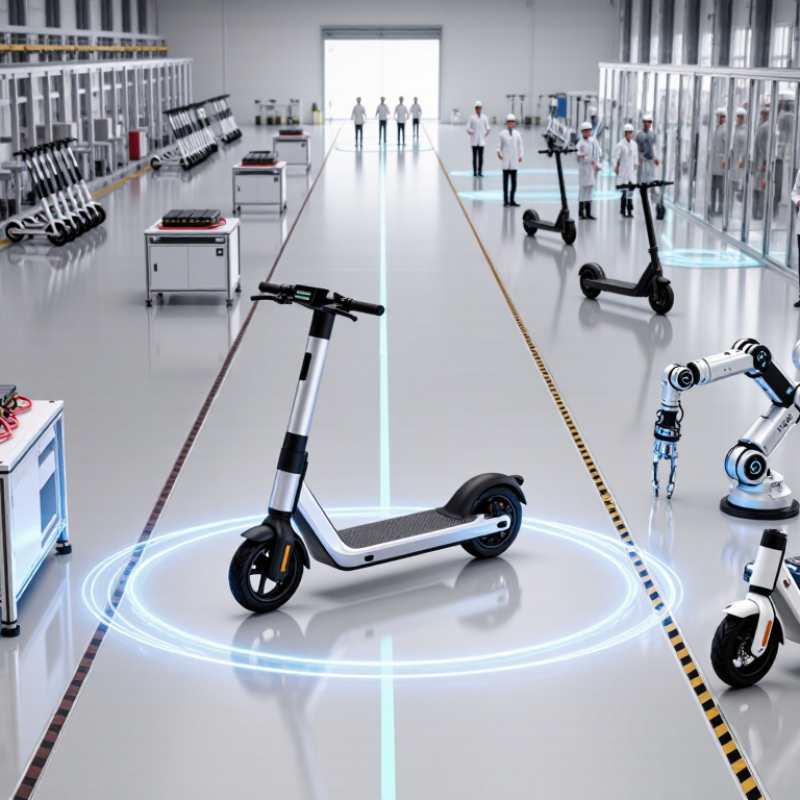
The best electric scooter manufacturer in 2026 is defined by measurable reliability, not showroom speed. The IEA’s Global EV Outlook 2024 reports that electric two- and three-wheelers made up more than half of the global electric vehicle stock. That scale raises expectations for safer batteries, stronger frames, and consistent production. A serious manufacturer should publish battery test methods, water-resistance results, braking distances, and failure rates. Vague promises are not enough.
Look for engineering evidence. A reliable scooter should maintain stable braking on wet pavement, protect connectors from road spray, and prevent excessive battery heating during repeated climbs. Independent testing against standards such as UN 38.3 for lithium battery transport adds credibility.
The Global Electric Mobility Readiness Index also shows that charging access and infrastructure strongly influence adoption. Manufacturers should therefore design practical charging systems, replaceable components, and clear repair procedures. Small details matter.
Repairability matters more than glossy advertising. Research from the European Environment Agency links longer product lifetimes with lower material demand and environmental pressure. A manufacturer that supplies brake pads, tires, controllers, and battery diagnostics supports that goal. Yet no factory is perfect. Published durability data may still reflect controlled conditions, not every pothole or winter commute. Global buyers should question missing information, compare warranty claims, and inspect after-sales response times. The best supplier keeps improving when real-world evidence exposes weaknesses.
Modern electric scooter manufacturing depends on more than motor power. Reliable factories combine battery engineering, frame design, software, and quality control. For global buyers, these systems often matter more than attractive specifications.
Battery management systems monitor voltage, temperature, and charging behavior. They help protect lithium-ion cells during daily use. A well-designed controller also manages acceleration smoothly, reducing stress on the motor and drivetrain. Some manufacturers now add regenerative braking, app diagnostics, and over-the-air software updates. These features improve usability, but they can also create privacy and maintenance concerns.
Frame production requires accurate welding and corrosion-resistant materials. Testing should include vibration, water exposure, braking distance, and repeated folding cycles. Small faults often appear only after hundreds of cycles. That is where my view becomes less certain: laboratory testing cannot perfectly reproduce every road, rider, or climate. Independent inspections remain valuable. Production records, traceable components, and documented safety procedures show stronger reliability than marketing language.
Tips: Ask for battery test reports, charger certifications, and clear warranty conditions. Check whether replacement tires, controllers, and displays are available in your market. Request samples before placing large orders. A short road test can reveal loose stems, delayed braking, or uncomfortable acceleration. Also inspect the scooter after transport, because packaging damage may not be visible immediately.
| Technology / Dimension | Common 2026 Specification or Practice | Why It Matters to Global Buyers | Recommended Verification Point |
|---|---|---|---|
| Battery Chemistry | Lithium-ion NMC is widely used for high energy density; lithium iron phosphate (LFP) offers improved thermal stability and cycle durability but is generally heavier for the same energy capacity. | Affects weight, range, service life, charging behavior, and transport requirements. | Request the cell chemistry, nominal voltage, rated capacity in Wh, test method, and battery safety documentation. |
| Battery Management System (BMS) | Protection commonly includes overcharge, over-discharge, over-current, short-circuit, over-temperature, cell balancing, and state-of-charge monitoring. | Reduces battery damage risk and helps maintain consistent performance across the pack’s service life. | Check protection thresholds, balancing method, event logging, firmware controls, and independent test reports. |
| Battery Energy Capacity | Urban commuter models commonly use approximately 300–800 Wh; larger long-range models may exceed 1,000 Wh. | Wh is more useful than ampere-hours alone when comparing range between different system voltages. | Calculate energy as nominal volts × ampere-hours and compare claimed range with an identified test condition. |
| Motor System | Brushless direct-drive or geared hub motors are common; typical nominal outputs range from about 250 W to 1,000 W, depending on local regulations and vehicle class. | Motor design influences hill performance, acceleration, noise, maintenance, and legal classification. | Confirm nominal versus peak power, rated torque, thermal protection, motor efficiency, and local legal limits. |
| Motor Control Algorithm | Field-oriented control (FOC) is used in many advanced controllers to improve torque smoothness, efficiency, and low-speed response. | Improves ride comfort and can reduce audible motor noise and unnecessary energy loss. | Evaluate starting behavior, hill testing, controller temperature, regenerative-braking settings, and firmware stability. |
| Charging System | Standard charging commonly takes about 4–10 hours, while higher-current chargers can reduce charging time when approved for the battery pack. | Charging speed affects fleet turnaround, home convenience, battery aging, and electrical safety. | Verify charger output, connector design, input-voltage compatibility, thermal monitoring, and charging-cycle testing. |
| Regenerative Braking | Electronic regenerative braking can recover a limited amount of energy during deceleration; it does not replace mechanical braking. | Supports smoother speed control and may reduce brake-pad wear, especially in stop-and-go traffic. | Check independent brake redundancy, adjustable braking strength, wet-weather performance, and fail-safe behavior. |
| Mechanical Braking | Drum, disc, and electronic braking systems are used; dual braking systems provide additional control redundancy. | Reliable stopping performance is essential for rider safety and regulatory acceptance. | Review stopping-distance results, brake fade tests, rotor or drum dimensions, cable routing, and spare-part availability. |
| Water and Dust Protection | Ingress ratings are commonly expressed under IEC 60529, such as IP54 or IPX5; the exact rating applies only to the tested configuration. | Helps buyers assess suitability for rain, road spray, dust, and outdoor storage. | Request the complete IP test report and confirm whether the rating covers the battery compartment, display, charger, and connectors. |
| Frame and Folding Structure | Aluminum alloys are widely used for low weight; reinforced steel or hybrid structures may be selected for higher loads and durability. | Structural design affects portability, rider-weight capacity, fatigue life, vibration, and safety. | Review fatigue testing, hinge-lock design, weld inspection, maximum load rating, and corrosion protection. |
| Suspension and Tires | Solid, pneumatic, and tubeless pneumatic tires are common; suspension may use elastomer, spring, or hydraulic components. | Influences comfort, traction, puncture risk, steering stability, and performance on uneven surfaces. | Confirm tire dimensions, recommended pressure, puncture-repair procedure, suspension travel, and replacement availability. |
| Lighting and Visibility | Front and rear lamps, brake lights, side reflectors, and turn indicators may be required depending on the destination market. | Improves rider visibility and supports compliance with local road-use requirements. | Check photometric performance, lamp placement, automatic brake-light activation, wiring protection, and regional requirements. |
| Connectivity and Fleet Functions | Bluetooth, cellular tracking, GPS, electronic locking, firmware updates, diagnostics, and geofencing may be integrated into connected models. | Enables asset tracking, usage data, remote maintenance, theft deterrence, and fleet utilization analysis. | Assess network coverage, API access, data ownership, cybersecurity controls, subscription costs, and offline operation. |
| Safety and Compliance Testing | Relevant requirements vary by market and may include EN 17128 for certain personal light electric vehicles, UL 2272 for electrical systems, and UL 2271 for battery packs. | Testing evidence helps reduce regulatory, insurance, import, and product-liability risks. | Confirm the exact model, battery, charger, and production configuration covered by each certificate or test report. |
| Quality Control and After-Sales Support | Mature production systems typically use incoming inspection, battery traceability, end-of-line testing, sampling plans, root-cause analysis, and controlled spare-parts support. | Consistent quality and accessible parts can lower warranty costs and improve long-term fleet uptime. | Request inspection records, serial-number traceability, warranty terms, repair manuals, spare-parts lead times, and service training materials. |
Note: Specifications and legal requirements vary by vehicle category and destination market. Buyers should validate the final configuration against current local regulations and independent test documentation.
2026 Best Electric Scooter Manufacturer for Global Buyers
Production capacity should be measured on the factory floor, not in a brochure. The International Energy Agency’s Global EV Outlook 2024 identifies electric two- and three-wheelers as the most electrified road-transport segment. This signals strong demand, but demand alone does not prove supply reliability. Buyers should request monthly output records, battery testing procedures, and capacity during peak seasons. A practical factory audit checks welding quality, motor traceability, spare-parts storage, and final inspection sampling.
Customization must remain technically controlled. Experienced manufacturers can adjust deck dimensions, suspension settings, display language, firmware limits, lighting, and packaging. Battery choices also require careful engineering. Cell configuration, thermal protection, charging time, and transport documentation affect the complete product. ISO 4210-10 and IEC 62133-2 provide useful reference points for safety and battery evaluation, although market-specific requirements still differ. Small changes can create large testing costs.
International supply depends on disciplined coordination. UNCTAD’s Review of Maritime Transport 2024 states that over 80% of global trade by volume moves by sea. Delays therefore affect scooters, chargers, cartons, and replacement parts together. Suppliers should offer production milestones, pre-shipment inspections, serial-number traceability, and clear Incoterms. Dual sourcing is wiser for critical components. No factory is perfect. Some annual-capacity claims remain difficult to verify, and buyers should challenge them with recent shipment evidence, not promises.
A strong manufacturer adapts the scooter to local roads, weather, regulations, and repair habits. The International Energy Agency’s Global EV Outlook 2024 reports that electric two- and three-wheelers represented more than half of global new sales in 2023. That growth increases buyer choice, but quality varies widely. Markets are not interchangeable.
European buyers should request CE conformity records, EN 17128 testing evidence, and battery traceability under the EU Battery Regulation. In the United States, manufacturers should provide applicable UL 2272 system documentation and UL 2271 battery evidence. Indian importers may need configurations aligned with AIS-156 requirements. A factory that cannot explain these documents clearly is a risk. Service matters more.
NABSA’s 2024 State of the Industry Report recorded 157 million shared micromobility trips in North America during 2023. This suggests that durability, quick charging, and replaceable parts matter in high-use markets. For tropical regions, inspect water-resistance testing and connector sealing. For colder cities, ask for battery performance data below 5°C. I would also audit warranty claims, spare-part stock, and technician response times before signing a contract. A polished sample can hide weak after-sales support. That assumption fails. The best manufacturer is not always the cheapest or the largest; it is the one that can prove consistent performance in the buyer’s actual market.