ALL PRODUCTS
- Solar Panel
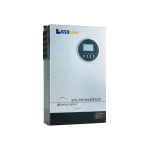
- Hybrid Inverter
- Lithium Battery
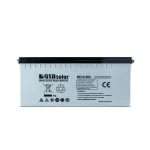
GSB SOLAR LITHIUM BATTERIES
- Gel Battery
- Solar Street Lights
- Pump Inverter
Choosing among China’s best hybrid inverter manufacturers requires more than comparing online prices. A reliable supplier should combine proven engineering, consistent production, transparent documentation, and responsive technical support. The right hybrid inverter must match your battery chemistry, solar array size, grid conditions, and installation environment.
Look closely at the product specifications. Check continuous power, surge capacity, MPPT voltage range, conversion efficiency, communication ports, and protection functions. Ask whether the inverter supports lithium or lead-acid batteries, remote monitoring, and backup loads during outages. A practical test matters. Request test reports, warranty terms, sample units, and references from installations similar to yours.
Factory evidence is important.
An on-site audit or live video inspection can reveal more than polished brochures. Examine assembly areas, burn-in testing, serial-number tracking, and final inspection records. Confirm relevant standards and market approvals, such as CE or other regional requirements, instead of accepting vague claims. Review service response times, spare-parts availability, firmware update procedures, and realistic delivery schedules.
Price still matters, but it should not lead the decision. A very low quotation may exclude monitoring devices, batteries, commissioning support, or after-sales service. That assumption can become expensive later. Manufacturer age is useful, though it is not conclusive; a newer company may offer strong technology, while an older one may provide better stability. Careful comparison is necessary. In this guide, we examine how to evaluate Chinese hybrid inverter manufacturers through technical evidence, production capability, customer feedback, and long-term service reliability. Some details may remain uncertain until samples are tested in your own operating conditions.
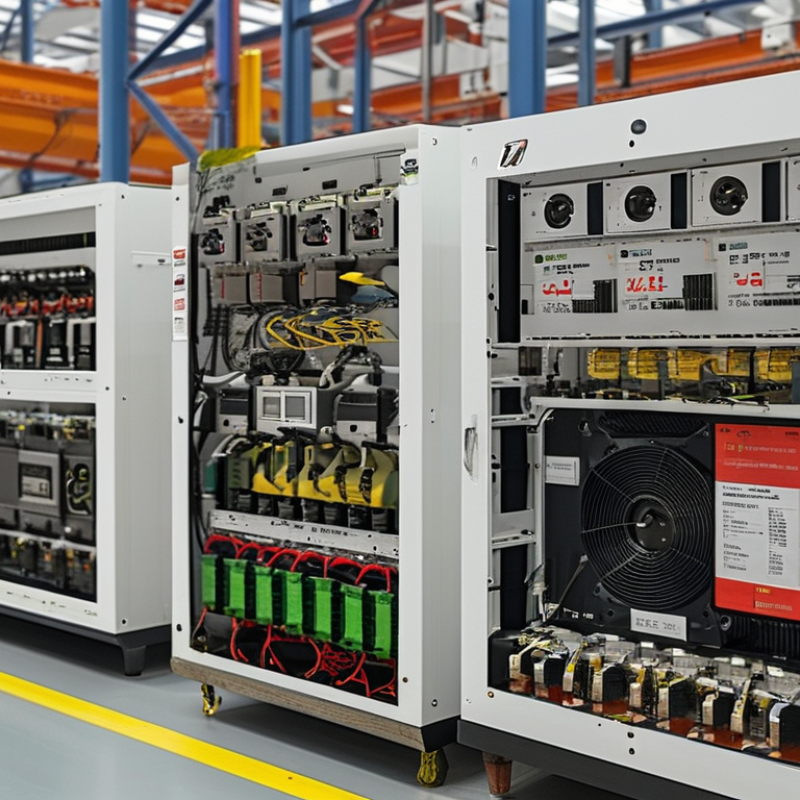
A hybrid inverter manages electricity from solar panels, batteries, and the public grid. It converts solar power into usable household electricity. It can also store surplus energy for evening use or outages. During a blackout, the inverter may isolate essential circuits and keep lights, routers, or refrigerators running. The exact backup capacity depends on battery size and system design.
The manufacturer matters because an inverter is not just a metal box. Its control software decides when to charge, discharge, or draw grid power. Poor settings can waste solar energy or shorten battery life. A dependable manufacturer should provide clear efficiency data, safety testing, firmware updates, and a practical warranty. Service access matters too. A technical problem on a hot summer afternoon cannot wait for vague email replies.
In real installations, I check wiring instructions, monitoring accuracy, and the response time of local support. A screen showing 100% battery power is useful only when the reading is trustworthy. Compatibility with batteries, meters, and backup loads should be confirmed before purchase. No selection is perfect. Some units cost less but offer weaker documentation or limited repair support. That trade-off deserves honest review. Installers should also explain noise levels, ventilation space, and maintenance needs. These small details often determine whether the system performs smoothly after several years.
A high-quality hybrid inverter begins with stable power conversion, not a flashy efficiency number. Look for peak efficiency above 95 percent, but study European or weighted efficiency too. Real homes rarely operate at full load. An inverter should track changing sunlight through dual MPPT inputs. This matters on roofs with different orientations or partial shade. Wide MPPT voltage ranges help maintain energy production during early mornings and cloudy periods. Check the battery voltage window carefully. A mismatch can reduce usable storage or shorten equipment life. Small details matter.
During installation work, I examine thermal design before software features. Large heat sinks, quiet variable-speed fans, and clear clearance requirements support reliable operation. An IP65-rated enclosure suits many protected outdoor locations, though IP ratings do not replace correct mounting. The unit should include overvoltage, short-circuit, over-temperature, and anti-islanding protection. Fast transfer switching is important when backup loads include routers, pumps, or other sensitive equipment. Surge protection and safe battery isolation also deserve attention. I once underestimated cable length losses. That mistake was expensive. Engineers should calculate current, voltage drop, and maximum fault current before selecting a model.
Good monitoring shows solar production, battery state, grid flow, alarms, and historical data. Clear records help technicians diagnose faults instead of guessing. Communication should support common interfaces, secure updates, and local operation during internet outages. Ask for independent test reports, grid-compliance certificates, and a published warranty process. Manufacturer claims are useful, but field data is stronger. Review idle consumption, noise, restart behavior, and performance at low temperatures. No inverter is perfect. A careful comparison often reveals compromises between backup power, battery capacity, and cost.
| Technical Feature | High-Quality Selection Benchmark | Why It Matters | What to Verify Before Purchase |
|---|---|---|---|
| Rated Output Power | Select a continuous output rating that matches the actual household or commercial load. Common residential models are approximately 3–12 kW. | The inverter must support the continuous demand of appliances without excessive thermal stress or nuisance shutdowns. | Check the continuous AC output, rated current, phase configuration, and local grid requirements on the official datasheet. |
| Surge Capacity | A strong design commonly provides approximately 2 times rated power for a short duration, depending on the model and operating mode. | Motors, pumps, compressors, and refrigerators can require several times their running power during startup. | Confirm the surge duration, allowable surge power, and whether the specification applies in backup mode or only grid-connected mode. |
| Maximum Conversion Efficiency | Approximately 96%–99% for many modern transformerless hybrid inverter designs. | Higher efficiency reduces energy loss, heat generation, and operating cost over the service life. | Compare maximum efficiency with European or weighted efficiency, and review efficiency curves at partial load. |
| MPPT Efficiency and Quantity | MPPT efficiency generally above 99% is desirable, with at least two independent MPPT trackers for many residential systems. | Multiple trackers improve energy harvest when panels have different orientations, shading conditions, or string lengths. | Check the number of MPPTs, MPPT voltage range, maximum input current per tracker, and supported string design. |
| PV Input Voltage Range | A broad operating range, often around 120–550 V DC for residential high-voltage units, subject to the specific model. | A suitable voltage range allows flexible panel string design and stable operation during changing sunlight conditions. | Verify maximum DC voltage, startup voltage, MPPT operating range, short-circuit current limit, and cold-weather voltage calculations. |
| Battery Compatibility | Support for commonly used lithium-ion batteries, especially lithium iron phosphate (LFP), with configurable charge and discharge parameters. | Correct battery communication and charging limits improve safety, usable capacity, and battery service life. | Confirm supported battery voltage, CAN or RS485 communication, approved battery list, maximum charge current, and maximum discharge current. |
| Battery Voltage Architecture | Low-voltage systems are commonly around 40–60 V; high-voltage systems may use battery stacks above 100 V. The inverter and battery must be matched. | Voltage architecture affects cable size, current, efficiency, installation complexity, and battery scalability. | Check the complete battery operating voltage range and never connect a battery outside the inverter’s specified limits. |
| Backup Switching Time | Approximately 10–20 ms is common for fast backup transfer, while some systems may require a dedicated UPS function for sensitive equipment. | Short transfer time helps keep essential loads operating during a grid outage. | Confirm the tested transfer time, backup-load limitations, phase behavior, and compatibility with computers, medical devices, and motor loads. |
| Operating Modes | At minimum: self-consumption, battery backup, time-of-use charging, grid feed-in control, and zero-export control where permitted. | Flexible control modes allow the system to adapt to electricity tariffs, backup priorities, and local export regulations. | Review the user manual for scheduling functions, export limits, generator support, load management, and firmware capabilities. |
| Protection Functions | Protection should include anti-islanding, overvoltage, undervoltage, overcurrent, short circuit, overtemperature, insulation monitoring, and ground-fault protection where applicable. | Integrated protection reduces risks to people, equipment, the battery, and the electrical installation. | Request the protection-function list and installation requirements; confirm whether external DC and AC surge protection is still required. |
| Safety and Grid Compliance | The product should be tested to applicable standards such as IEC 62109-1/-2 and IEC 62116, together with the grid code required in the target market. | Compliance supports legal connection, safe operation, and acceptance by utilities or inspection authorities. | Check current test reports, certificates, declarations of conformity, and the exact model number covered by each document. |
| Ingress Protection | IP65 or higher is commonly preferred for outdoor residential installation, provided the installation environment is suitable. | A suitable enclosure helps protect internal electronics from dust and water exposure. | Confirm the IP rating, operating temperature, humidity limits, altitude limit, ventilation clearance, and direct-sunlight requirements. |
| Thermal Management | Efficient passive cooling or controlled fan cooling, with clear derating data at high ambient temperatures. | Good thermal design improves reliability and helps maintain output during hot weather. | Review the operating temperature range, power derating curve, fan-replacement requirements, and maximum installation temperature. |
| Monitoring and Communication | Local display or web access plus reliable monitoring through Wi-Fi, Ethernet, RS485, or an equivalent communication interface. | Accurate monitoring simplifies commissioning, fault diagnosis, performance tracking, and warranty support. | Check data refresh intervals, offline operation, data ownership, remote firmware updates, Modbus support, and cybersecurity controls. |
| Expandability and Parallel Operation | Parallel operation or modular expansion is valuable when future load growth or additional battery capacity is expected. | Scalability can reduce the cost and disruption of upgrading the system later. | Confirm the maximum number of parallel units, phase-balancing method, communication cables, firmware requirements, and commissioning procedure. |
| Warranty and Serviceability | A clearly documented warranty of approximately 5–10 years, supported by defined service channels and replacement procedures. | Inverter reliability depends not only on hardware quality but also on spare parts, technical support, and response time. | Read warranty exclusions, geographic coverage, serial-number requirements, repair or replacement terms, and availability of local technical support. |
Selection benchmarks are general industry reference values rather than universal requirements. Always verify the latest datasheet, certification scope, local electrical code, grid connection rules, and compatibility between the inverter, photovoltaic array, battery, and loads.
When evaluating China’s hybrid inverter manufacturers, begin with evidence, not catalog claims. IEA PVPS reported more than 400 GW of new solar capacity worldwide in 2023. This growth increases pressure on inverter reliability, battery compatibility, and technical support. Ask for independent test reports covering IEC 62109, IEC 62116, and IEC 61727 requirements. A factory certificate alone is not enough.
Examine the product under real operating conditions. Check MPPT performance during cloudy mornings, noise near residential walls, and switching behavior during grid interruptions. Request measured efficiency curves, not only the peak figure. BloombergNEF reported that average lithium-ion battery pack prices fell to 115 dollars per kWh in 2024. Lower storage costs make hybrid systems attractive, but poor charging control can still shorten battery life. Review thermal tests, overload duration, surge protection, and firmware update procedures.
Manufacturer evaluation also requires operational proof. Request three-year field failure data, warranty response times, spare-part locations, and installer training records. ISO 9001 helps, but it does not prove consistent production. Factory audits should trace cells, circuit boards, and final testing records. I would also check cybersecurity policies and remote-access permissions. Many buyers overlook these details. That is a mistake. A supplier may offer impressive efficiency while providing weak after-sales support. Leave room for doubt, verify every number, and compare references from similar climates and grid conditions.
Choosing among China’s best hybrid inverter manufacturers requires more than comparing price and output ratings. Check certificates that match your target market and installation type. Common references include IEC 62109 for inverter safety, IEC 62477 for power systems, and relevant grid-connection standards. Some markets may require UL, CE, or other national approvals. Verify the certificate number, issuing laboratory, product model, and validity date. A certificate for one model may not cover another.
Quality control should be visible, not merely promised. Ask whether the factory performs incoming component inspection, automated assembly checks, insulation testing, thermal cycling, and full-load burn-in. Request sample test reports and serial-number traceability. Examine enclosure protection, cooling design, surge protection, and firmware update procedures. In real projects, small details matter: loose terminals, noisy fans, or unclear fault codes can create expensive service calls. A certificate alone is not proof of consistent production.
Tips: Request a factory audit, video evidence, and recent failure-rate data. Confirm warranty terms, spare-part availability, response times, and remote diagnostic support. Ask who handles firmware problems after installation. Support should include clear manuals, wiring diagrams, commissioning guidance, and trained technicians. Do not rely only on sales promises. I have seen impressive test documents but weak after-sales processes; that gap deserves careful questioning. Missing information is also information.
Selecting the best hybrid inverter manufacturer starts with your site, not a sales brochure. Measure daily loads, peak demand, battery chemistry, solar capacity, and outage duration. Measure first. A suitable unit should match local grid codes, MPPT voltage ranges, backup loads, and communication protocols. Compatibility prevents expensive redesigns.
Industry data shows why this decision matters. The International Energy Agency reported nearly 510 GW of renewable capacity additions in 2023. Its Batteries and Secure Energy Transitions report also recorded almost 42 GW of new battery storage that year. Manufacturers now face larger, more complex systems. Ask for independent test results, thermal protection details, efficiency curves, and documented safety certifications. Do not rely only on the highest advertised efficiency.
Service quality deserves equal attention. Check warranty exclusions, replacement procedures, firmware support, installer training, and spare-parts availability. Request references from systems operating in similar climates. A manufacturer with transparent failure data appears more credible than one offering vague promises. Total cost matters more than purchase price. Include installation, monitoring, battery integration, and probable downtime. One uncomfortable truth remains: no inverter fits every site. Even careful specifications can miss real household behavior, seasonal shading, or weak communication networks. Leave room for testing and revision. Ask harder questions.
Compare the factors that matter most when selecting a hybrid inverter manufacturer for residential or commercial energy systems. The scoring model uses a 100-point procurement framework, giving greater weight to safety, system compatibility, efficiency, warranty support, and monitoring capabilities.
A strong manufacturer should demonstrate compliance with applicable grid and safety requirements, support lithium battery communication protocols, provide high conversion efficiency, offer a clearly defined warranty, and maintain reliable after-sales service. Always verify test reports, certifications, datasheets, and local grid compatibility before purchasing.