ALL PRODUCTS
- Solar Panel
- Hybrid Inverter
- Lithium Battery
GSB SOLAR LITHIUM BATTERIES
- Gel Battery
- Solar Street Lights
- Pump Inverter
China’s car parking market is changing quickly, especially in dense cities with limited land. A reliable Car Elevator Platform can move vehicles between levels, reduce ramp space, and support more organized parking layouts.
However, product quality varies widely. Some manufacturers focus on hydraulic lifting systems. Others develop screw-driven platforms, scissor lifts, or integrated parking automation. This guide examines ten leading Chinese manufacturers through practical criteria, including lifting capacity, platform size, travel speed, safety locks, control systems, installation support, and after-sales service.
Parking researcher Dr. Paul Barter has said, “Parking is a transport problem.” His observation fits this industry well. A platform is not merely steel, motors, and buttons. It must work safely beside columns, doors, drainage channels, and moving vehicles. Small design errors matter.
Real projects reveal the difference.
A showroom model may look impressive. A busy apartment garage tests it harder. Buyers should inspect welding quality, emergency lowering systems, sensor placement, noise levels, and maintenance access. They should also request factory records, reference projects, load-testing evidence, and destination-market compliance documents.
The ranking is not absolute. That matters. A low-cost supplier may suit a private residence, but fail commercial demands. A premium manufacturer may offer stronger support, yet require a larger budget. Readers should compare verified specifications rather than trust marketing language alone. This review offers a practical starting point for identifying China’s top ten manufacturers, while recognizing that local installation conditions can change the final decision.
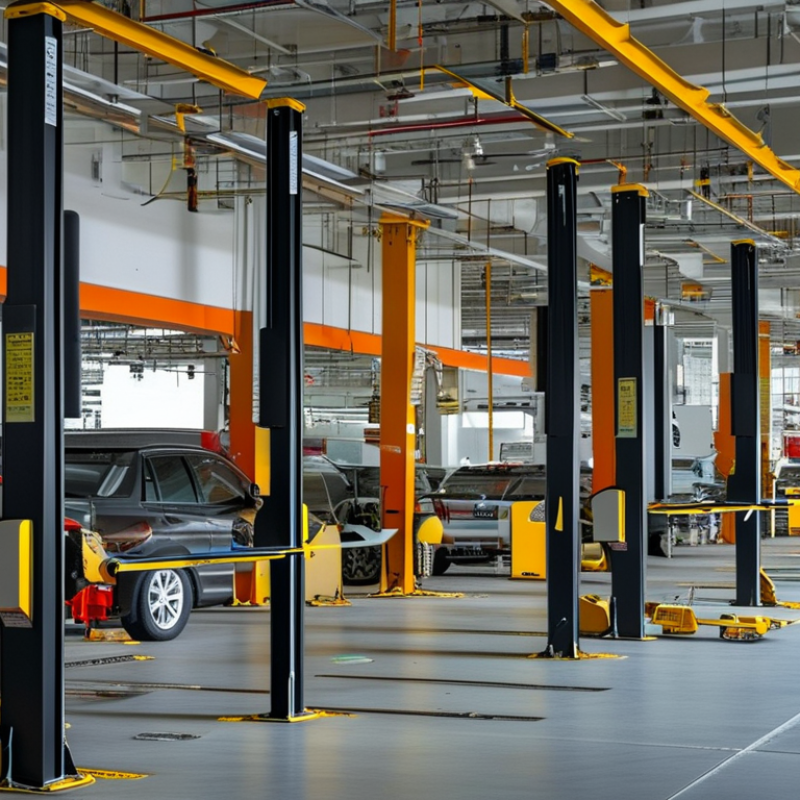
A car elevator platform is a powered lifting system that moves vehicles between different levels. It can serve parking buildings, private garages, workshops, and compact urban sites. Unlike a passenger elevator, it is designed for vehicle weight, wheel positioning, and controlled loading.
The platform usually travels inside vertical guide rails. A hydraulic cylinder or electric traction system raises and lowers it. The driver places the car on marked floor guides, selects the destination, and leaves the platform when required. Sensors check the platform position, door status, and load conditions. Mechanical locks hold the platform at each landing. Interlocked doors should remain closed while the platform moves.
A typical installation may include a shallow pit, overhead clearance, drainage equipment, and protective barriers. Engineers must calculate vehicle dimensions, total load, travel height, stopping accuracy, and emergency access before production. In China’s manufacturing market, these details often separate a practical supplier from a low-cost imitator. Still, specifications on paper can miss daily problems. A wet tire may reduce positioning accuracy. A narrow entrance may frustrate drivers. Maintenance records matter more than polished images.
Regular inspections should examine cables, hydraulic hoses, guide rollers, sensors, locks, and platform leveling. Operators also need clear instructions and visible warning signs. The safest design is not always the fastest one. A slower lift with stable stopping can protect vehicles, buildings, and users better.
| No. | Evaluation Dimension | Typical Technical Data | How It Works | Why It Matters When Selecting a Manufacturer |
|---|---|---|---|---|
| 1 | Rated Load Capacity | Common passenger-car applications: approximately 2,500–5,000 kg; larger systems may be engineered for heavier vehicles. | The lifting mechanism, guide rails, platform structure, and braking system are designed to raise and lower the specified vehicle load with an appropriate safety margin. | The rated load must exceed the combined weight of the heaviest vehicle, occupants, and any permitted accessories. |
| 2 | Platform Size | Typical clear platform widths are about 2,500–3,000 mm, with lengths commonly around 5,000–6,500 mm. | The vehicle is driven or positioned onto a steel platform. The platform transfers the load to the lifting frame and guide system. | The platform should accommodate the longest and widest vehicle expected at the site while maintaining safe door and wall clearances. |
| 3 | Drive Technology | The principal drive options are hydraulic, traction, screw-driven, and chain or cable-supported lifting systems. | Hydraulic systems use pressurized fluid; traction systems use a motor, sheave, and counterweight or counterbalance; screw systems use a rotating threaded mechanism; chain or cable systems transmit motor force through flexible lifting members. | Drive selection affects installation depth, maintenance requirements, noise, energy use, travel height, and lifecycle cost. |
| 4 | Rated Lifting Speed | Many vehicle elevators operate at approximately 0.10–0.30 m/s, depending on travel height, capacity, and applicable regulations. | A motor and control system regulate the upward and downward movement so that acceleration, travel, leveling, and stopping remain controlled. | Higher speed can improve traffic flow, but it generally requires more advanced controls, stronger structural components, and stricter commissioning procedures. |
| 5 | Lifting Height and Stops | Low-rise applications may serve two or three levels; lifting height is commonly engineered from several metres to more than 10 metres. | Position sensors and limit switches identify each landing. The controller stops the platform at a predetermined level for vehicle entry and exit. | The manufacturer should verify shaft dimensions, overhead clearance, pit depth, landing alignment, and the required number of stops before design approval. |
| 6 | Leveling Accuracy | A properly configured system is generally designed to stop close to the landing level, with the permitted tolerance determined by the applicable code and project specification. | Encoders, proximity sensors, limit switches, and closed-loop or controlled stopping logic reduce platform height differences at each floor. | Accurate leveling reduces tire impact, improves driving comfort, and lowers the risk of trips or vehicle underbody contact. |
| 7 | Door and Interlocking System | Common arrangements include manual or automatic landing doors, vertically lifting doors, hinged doors, and rolling doors with electrical or mechanical interlocks. | Interlocks prevent landing doors from opening unless the platform is correctly positioned and prevent movement when a door is not securely closed. | Door compatibility is essential for preventing vehicle falls, unauthorized access, and movement during loading or unloading. |
| 8 | Safety Protection | Typical protection includes overspeed or unintended-movement protection, emergency stop controls, overload detection, slack-rope or chain monitoring, limit switches, and obstruction sensing. | Sensors and mechanical safety devices detect abnormal conditions and either stop the drive or hold the platform in a safe position. | A complete safety architecture is more important than lifting speed or cosmetic finish and must be assessed against local elevator and parking-equipment requirements. |
| 9 | Control and Emergency Operation | Typical controls include landing call stations, key switches or access cards, programmable controllers, emergency lowering, manual rescue operation, and fault indication. | The controller coordinates calls, door status, motor operation, floor positioning, alarms, and fault responses through a defined sequence. | Clear controls and a documented rescue procedure help operators recover vehicles safely during power failure, sensor faults, or other service interruptions. |
| 10 | Installation, Compliance, and Service | The project normally requires structural verification, electrical protection, drainage or waterproofing where applicable, commissioning tests, periodic inspection, and scheduled maintenance. | The complete system functions as an integrated installation: civil structure, guide rails, drive unit, platform, doors, controls, and safety devices must operate together. | A capable manufacturer should provide drawings, load calculations, manuals, training, spare parts, testing records, and after-sales support appropriate to the installation location. |