10 Tips for Choosing a Solar Panel with Battery

Choosing a solar panel with battery is not simply a matter of comparing wattage and price. It is a practical decision about sunlight, household habits, roof space, and evening demand. A family cooking dinner at 7 p.m. needs a different system from a homeowner who works nights and charges an electric vehicle after midnight.

NREL researcher Nate Blair has explained, “The value of storage depends on when it charges and discharges.” That simple observation deserves attention. A larger battery may look impressive, but it can be wasteful if the panels rarely fill it. Battery chemistry, usable capacity, cycle life, inverter efficiency, warranty terms, and emergency-load support all matter. So does winter weather.

Real homes are less predictable.

This guide, “10 Tips for Choosing a Solar Panel with Battery,” examines those details through a homeowner’s practical lens. It considers how to estimate daily electricity use, match panel output with storage capacity, and check whether backup power covers essential circuits. It also discusses installation quality, monitoring software, maintenance expectations, and realistic payback claims.

Some recommendations may challenge common buying habits. The cheapest package is not always the most economical. The biggest battery is not always the safest choice. Manufacturer promises also deserve careful questions, especially when warranty exclusions are difficult to read.

Before signing a contract, compare documented performance data and consult a qualified installer. Local sunlight, utility rules, roof conditions, and household demand can change the answer. No single solar panel with battery fits every home.
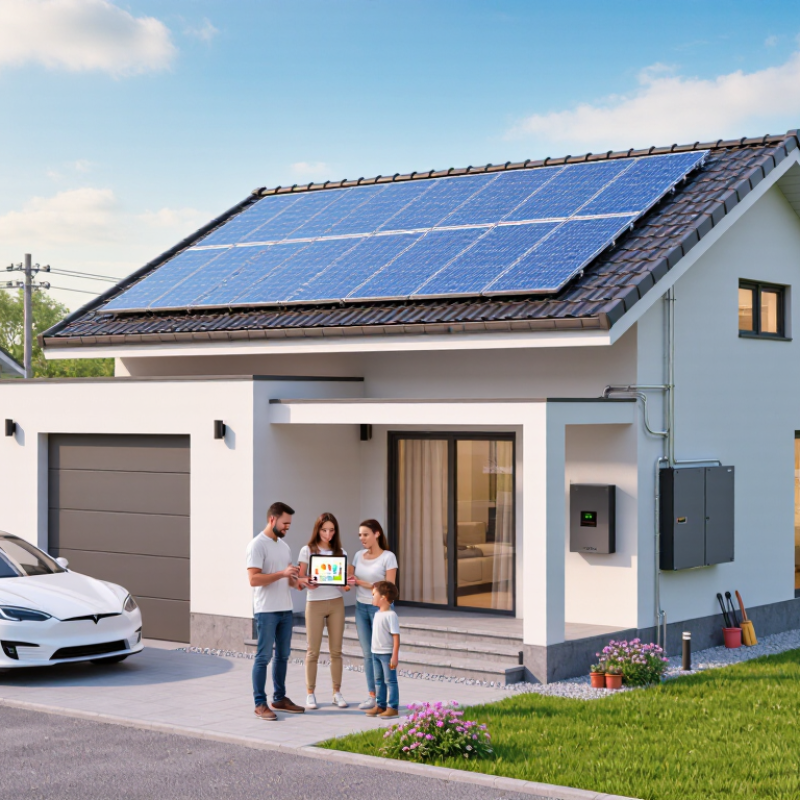
10 Tips for Choosing a Solar Panel with Battery

Understanding Solar Panel and Battery System Basics

10 Tips for Choosing a Solar Panel with Battery

Solar panels produce direct current when light reaches their cells. An inverter converts it into alternating current for household loads. A battery stores surplus energy, then releases it after sunset or during outages. That timing matters. Capacity means stored energy, measured in kilowatt-hours. Power means delivery speed, measured in kilowatts. Confusing these specifications causes expensive sizing mistakes. The International Energy Agency Photovoltaic Power Systems Programme reported global photovoltaic capacity above 1.6 terawatts in 2023. More panels do not automatically solve evening demand. Review hourly consumption, roof shading, seasonal weather, and backup priorities before comparing equipment.

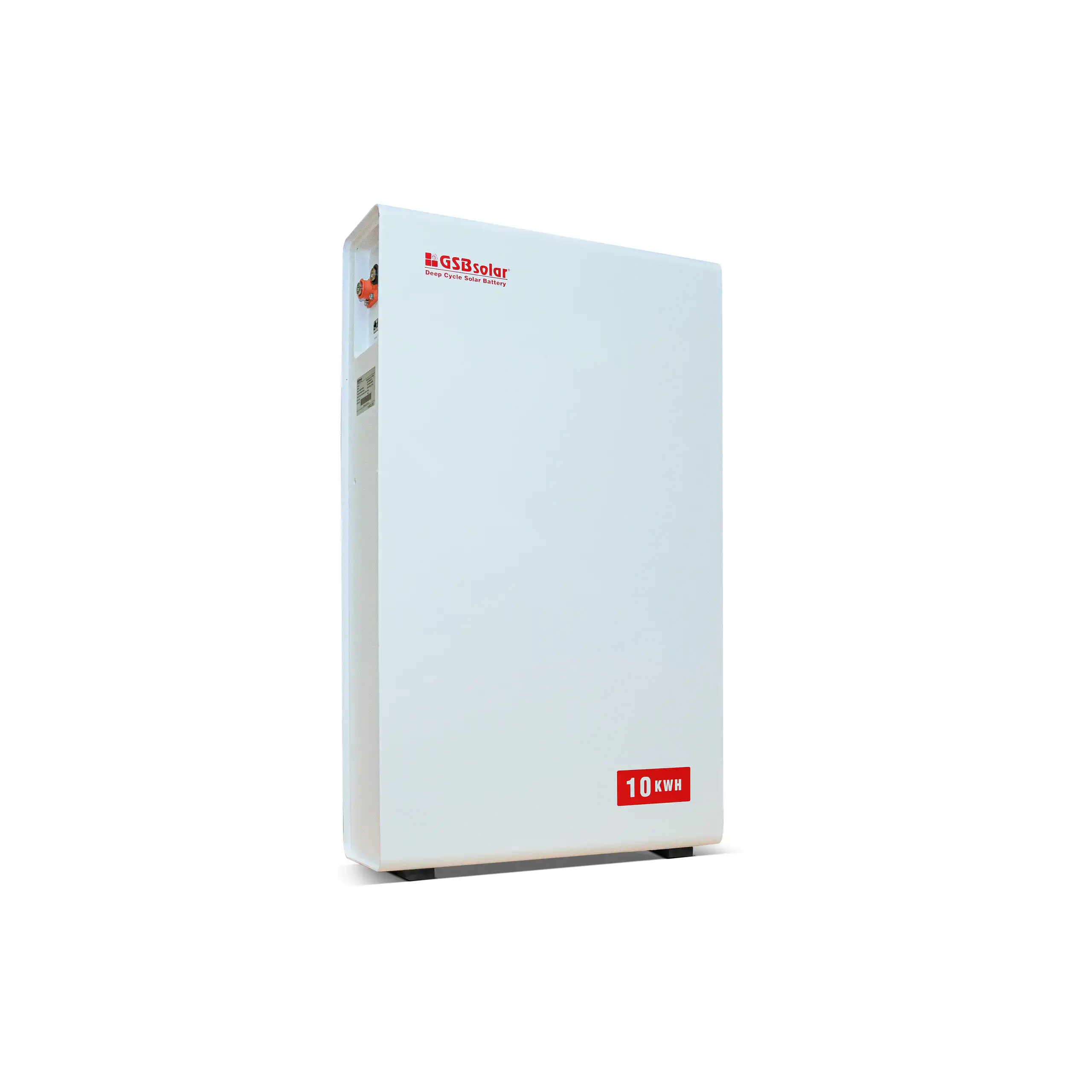
For example, a 10-kWh battery may not deliver 10 kWh to appliances. Round-trip losses, reserve settings, and temperature reduce usable energy. Department of Energy guidance emphasizes checking usable capacity, power ratings, safety certification, warranty terms, and installation conditions. Those details beat glossy efficiency claims. Battery chemistry affects weight, lifespan, thermal behavior, and maintenance. The 2024 BloombergNEF Battery Price Survey reported average lithium-ion pack prices of 115 dollars per kWh, down 20 percent year over year. That figure describes global pack prices, not installed home-system costs. Local labor, permits, wiring, and controls can dominate the final bill. I would compare daily cycling needs with warranted energy throughput, not advertised size. Leave expansion space. Even careful forecasts can fail when trees grow, tariffs change, or winter sunlight disappoints. An honest design records these uncertainties and tests them against measured consumption.
10 Tips for Choosing a Solar Panel with Battery: System Sizing Basics

This chart shows the approximate nominal battery capacity needed to provide one day of backup energy at different household consumption levels. The calculation assumes an 80% usable depth of discharge, which helps preserve battery life. Actual sizing should also consider solar production, seasonal sunlight, inverter efficiency, backup duration, and local energy usage.

Assessing Your Energy Needs and Available Sunlight

Before choosing a solar panel with a battery, measure how much electricity your home actually uses. Review twelve months of utility bills, not just one summer month. Note daily loads from refrigerators, pumps, heaters, computers, and evening lighting. A typical home may use 18 kilowatt-hours daily, but winter demand can rise sharply. My first estimate once ignored an old water pump. That small mistake changed the battery size considerably.

Available sunlight matters as much as household demand. Inspect the roof at different times, especially between 9 a.m. and 3 p.m. Nearby trees, chimneys, and seasonal shadows can reduce production. A roof receiving five peak sun hours may produce far less during cloudy winter weeks. Use a professional solar assessment when possible, including roof direction, tilt, shading, and local weather records. Photos taken in spring can mislead you.

Battery capacity should match your essential loads and backup expectations. Calculate usable capacity, because advertised storage often includes a reserve that protects battery life. If essential appliances need 6 kilowatt-hours overnight, a battery with exactly 6 kilowatt-hours may be too small after conversion losses. Allow a practical margin. Also check the system’s continuous power rating. A battery may store enough energy yet struggle to start a well pump or refrigerator compressor. I would rather revise an estimate twice than depend on optimistic sunlight data.

10 Tips for Choosing a Solar Panel with Battery - Assessing Your Energy Needs and Available Sunlight

A practical comparison guide for estimating solar generation, battery capacity, and system suitability.

No. Selection Tip What to Assess Useful Reference or Formula Recommended Action Priority
1 Calculate daily electricity use Review at least 12 months of electricity bills and identify average daily consumption, seasonal peaks, and high-load appliances. Average daily use = annual electricity consumption ÷ 365. Measure in kilowatt-hours (kWh). Record average and peak daily usage separately so the system is not sized only for mild-weather demand. Essential
2 Estimate available sunlight Consider location, roof orientation, tilt, shading, weather, and seasonal changes in solar irradiation. Peak sun hours (PSH) represent equivalent hours of sunlight at 1,000 W/m²; many locations receive roughly 2–6 PSH per day depending on season. Use a local solar resource map or professional site survey, and size against the lower winter sunlight level when year-round performance is required. Essential
3 Match panel capacity to demand Compare the required daily energy with the expected output of the photovoltaic array. Approximate array size = daily energy target ÷ (PSH × system performance ratio). A performance ratio of 0.70–0.85 is commonly used for preliminary estimates. Include losses from temperature, wiring, inverter conversion, dust, mismatch, and partial shading rather than using rated panel output alone. High
4 Choose the right battery capacity Determine how much energy must be stored for evening use, overnight operation, outages, or low-sun periods. Required nominal battery capacity = required usable energy ÷ (usable depth of discharge × battery efficiency). Separate essential backup loads from optional loads. Avoid sizing the battery for appliances that do not need backup power. Essential
5 Check usable depth of discharge Battery nameplate capacity is not always fully available because operating limits protect battery life and safety. Usable energy = nominal capacity × allowed depth of discharge. For example, 10 kWh at 90% usable depth provides about 9 kWh before efficiency losses. Compare usable kWh rather than nominal kWh, and confirm how the manufacturer defines usable capacity under warranty conditions. High
6 Verify inverter power output Assess simultaneous appliance demand, motor-starting surges, and the continuous power needed during backup operation. Power is measured in kilowatts (kW), while stored energy is measured in kWh. A larger battery does not necessarily provide higher instantaneous power. List essential appliances and their starting loads, especially pumps, refrigerators, compressors, and workshop equipment. High
7 Evaluate roof space and panel efficiency Measure usable roof area and account for setbacks, vents, skylights, access paths, and structural limitations. Panel efficiency is the percentage of incident sunlight converted into electricity under standard test conditions; commercial modules commonly fall around 18%–23%. Choose higher-efficiency panels when roof area is limited, but compare total installed cost and expected annual energy rather than efficiency alone. Medium
8 Plan for shading and temperature Identify shade from trees, buildings, chimneys, and nearby structures, along with high-temperature operating conditions. A panel’s rated power is measured under standard test conditions and may differ from real-world output due to heat, shade, soiling, and orientation. Use suitable electrical layouts or module-level power electronics where appropriate, and avoid placing an entire series string in a regularly shaded area. High
9 Review battery chemistry and operating conditions Compare cycle life, usable capacity, round-trip efficiency, temperature range, ventilation requirements, and safety controls. Round-trip efficiency describes the energy recovered after charging and discharging; actual results depend on load, temperature, power level, and system design. Install the battery within its specified temperature range and confirm that the battery management system provides appropriate monitoring and protection. High
10 Compare warranties, maintenance, and future expansion Check product warranty terms, expected degradation, service access, monitoring, compatibility, and whether additional panels or batteries can be added later. Solar modules gradually lose output over time; battery warranties commonly specify a period, cycle count, throughput limit, or retained-capacity threshold. Request written warranty conditions and confirm that future expansion will maintain electrical compatibility, charging limits, and system certification. Medium
Key planning note: Actual system output depends on site-specific sunlight, orientation, shading, equipment settings, weather, and local installation requirements. Final sizing should be verified through a qualified solar assessment.

Comparing Panel Efficiency, Battery Capacity, and Lifespan

10 Tips for Choosing a Solar Panel with Battery

Panel efficiency matters, but it is not the only buying measure. The Fraunhofer ISE Photovoltaics Report 2024 places mainstream crystalline-silicon modules near 20–23% efficiency. Higher efficiency can save roof space. It may also cost more. Compare annual energy yield, not just the percentage printed on a datasheet. Check temperature coefficients, shading behavior, and low-light performance. A panel rated at 23% can produce less on a hot, dusty roof. That detail is easy to miss.

Battery capacity should match your evening load, not your hopes. Measure nighttime appliances for at least seven days. Then include usable capacity, depth of discharge, inverter losses, and reserve power. The U.S. Department of Energy’s Energy Storage Grand Challenge Roadmap identifies long service life as a major performance target. NREL’s 2024 Annual Technology Baseline commonly models lithium-ion storage around 85% round-trip efficiency, although household results vary. Ask for cycle-life data and a calendar-life estimate. Ten years is not automatically ten years of full performance. I would leave extra capacity for ageing, but not oversize blindly; an oversized battery can remain underused. Review warranty conditions, operating temperature, and replacement access. Small details become expensive later.

Checking Compatibility, Installation Requirements, and Safety

Choosing a solar panel with a battery starts with compatibility, not appearance. Match the panel’s voltage and current range with the inverter and battery charger. Check whether the battery supports the inverter’s chemistry, capacity, communication protocol, and charging limits. A larger battery is not always better. Oversizing can leave capacity unused during low-sun periods.

Global solar capacity reached about 1,419 GW by the end of 2023, after approximately 345 GW of additions, according to IRENA’s Renewable Capacity Statistics 2024. That growth makes system quality more important, not less. Confirm the roof’s load rating, mounting surface, cable routes, shading, and maintenance access. The installation should include correctly sized conductors, overcurrent protection, grounding, disconnects, and weather-resistant enclosures. Measure twice.

Safety depends on the whole system. Keep batteries away from heat, flooding, and blocked ventilation. Follow the battery manufacturer’s clearance requirements and local electrical codes. A qualified installer should test polarity, insulation resistance, torque settings, emergency shutdowns, and backup-load behavior before handover. The U.S. Department of Energy’s Energy Storage Safety Strategic Plan identifies thermal runaway prevention, detection, and response as key priorities. Do not treat software settings as harmless; incorrect charge limits can damage cells. Real installations rarely match diagrams perfectly. A shaded panel, weak connection, or forgotten clearance can expose an otherwise sound design. Leave clearance.

Evaluating Costs, Warranties, Maintenance, and Future Expansion

10 Tips for Choosing a Solar Panel with Battery

Tip 1: Compare the full system cost, not only the panel price.

Include installation, permits, wiring, battery capacity, monitoring, and possible roof repairs. Ask for an itemized quote with estimated annual savings. I once underestimated upgrade costs because the original quote excluded electrical work. That mistake changed the payback period.

Tip 2: Examine warranty terms carefully.

Separate panel performance, product coverage, battery capacity, and installation guarantees. Check the warranty length, replacement process, labor coverage, and exclusions. A long warranty sounds reassuring, but weak service conditions may make it difficult to use. Request every promise in writing.

Tip 3: Ask how maintenance will be handled.

Panels usually need little attention, yet dust, leaves, shading, and loose connections can reduce output. Confirm inspection prices and monitoring support before signing. A practical check includes production data, battery temperature, cables, and mounting points. Small issues can grow quietly.

Tip 4: Plan for future expansion.

Your electricity use may increase after adding an electric vehicle, heat pump, or home office. Choose an inverter and battery system that can accept additional capacity. However, expansion limits vary, so ask about compatible components and installation space. I would not assume “expandable” means simple.

Tip 5: Verify the installer’s qualifications, insurance, references, and local compliance record.

A professional assessment should examine roof age, household consumption, sunlight, and backup priorities. Test the proposed design against cloudy days and winter demand. The cheapest option may not be the most reliable one. Get a second opinion.

Facebook X Instagram Pinterest WhatsApp WhatsApp
We use cookies to improve your experience on our website. By browsing this website, you agree to our use of cookies.